
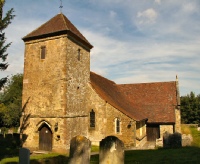
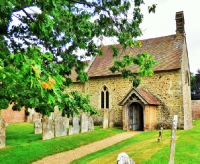
St Peter’s Church, Lodsworth
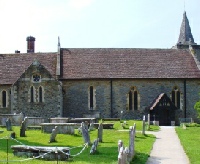
St Mary’s Church, Easebourne
St James’ Church, Selham

‘in FAITH we FOLLOW + in HOPE we LIVE + in LOVE we SERVE’

Eco Church -
For the Church of England, being ‘Net Zero Carbon 2030’ means that the carbon emissions of our buildings and travel will be reduced to less than 10% of our baseline levels. The remaining emissions will be offset in verified schemes that reduce carbon. That means overall, our buildings and travel will not contribute to rising carbon emissions: their contribution will be ‘net zero’. Responding to the climate crisis is an essential part of our responsibility to safeguard God’s creation and achieve a just world. The short animated video on the right highlights many of the steps that churches can take to achieve ‘Net Zero Carbon 2030’.
The Priory Churches journey towards Net Zero Carbon
Actions completed so far:
- Energy Footprint Tool completed for all Priory Churches; St Mary’s 8.4 tonnes gross of CO2 produced, 87% of emissions from gas
- Creation of Priory Churches Net Zero Carbon forum with first meeting in Oct 24
- Reduce boiler burn at St Mary’s by 20% a week and maximum temperature reduced to 18⁰c
- Attend Portsmouth Cathedral Net Zero Carbon conference (18 January 2025)
- Replace lightbulbs with LEDs: completed at St James’ Selham and St Mary’s Easebourne
- Energy champion to monitor bills and ensure switch off of equipment when not in use
- At St Mary’s, during the winter months, reduce use of east door, encourage use of main north door to reduce heat loss and draughts
- Net Zero information on the weekly church bulletin
- Energy Audit completed for St Mary’s
A Rocha UK’s Eco Church scheme has made significant progress in encouraging local churches to care for creation as a core tenet of faith and to integrate this across every aspect of church life. It has played a significant role in enabling congregations across all denominations to embrace the responsibility of creation care and to see it as an expression of love for God and others, including the natural world.
A Rocha UK’s approach to Eco Church is one of facilitating the movement, encouraging a learning community, and ensuring that the programme behind it is dynamic, continuously developing to keep up with the science and options for action.
You can find out more from their website: https://arocha.org.uk
You can get even more information about climate change by clicking on each of the two pictures below:
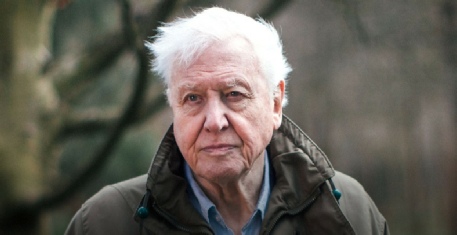
Climate Change -
BBC documentary


Climate Change -
a really simple guide
(from the BBC News website)

ECO CHURCH TIPS
FROM THE PRIORY CHURCHES BULLETIN
June 2026
07-
ECO TIPS: Go Fish!
In the UK, we largely eat just a handful of fish and seafood: cod, haddock, tuna, salmon and prawns. But our preference for these types of fish and seafood is fuelling overfishing. Check the Marine Conservation Society's Good Fish Guide for a wider range of sustainable alternatives to take some of the strain off these stocks and support local fishermen.
14-
ECO TIPS: Great Big Green Week
Great Big Green Week is an opportunity to showcase the good work that is already
being done in communities like ours, and support others to get involved with something new. The theme of Great Big Green Week 2026 is “Together for Good” – reflecting the truth that when people come together, they create real, practical benefits for local places, for nature, for climate, and for our shared future. As Christians, that calling to come together for the common good is deeply familiar. Find out more: www.greatbiggreenweek.com/
21-
ECO TIPS: Clean the Fridge
Try to clean out your fridge monthly to make use of any leftovers you have lying around. If you’re struggling for inspiration or recipes that make the most of your leftovers, why not visit the Love Food Hate Waste website or BBC Good Food for fun, tasty recipes that will use up your leftovers. Did you know for your fridge to work effectively it should be at 5 degrees Celsius or below? From time to time, you should check your fridge's built in thermometer against a freestanding one to ensure accuracy.
28-
ECO TIPS: Under Pressure!
Under-
Net Zero Carbon
Phil Stringer, chairman of The Priory Churches’ Net Zero Carbon Committee, reports that St Mary’s Church has received accreditation for the Eco Church Bronze Award in March this year -
